+ Resources for reflection, understanding,
and support, at your own pace.
/ A Place to Begin /
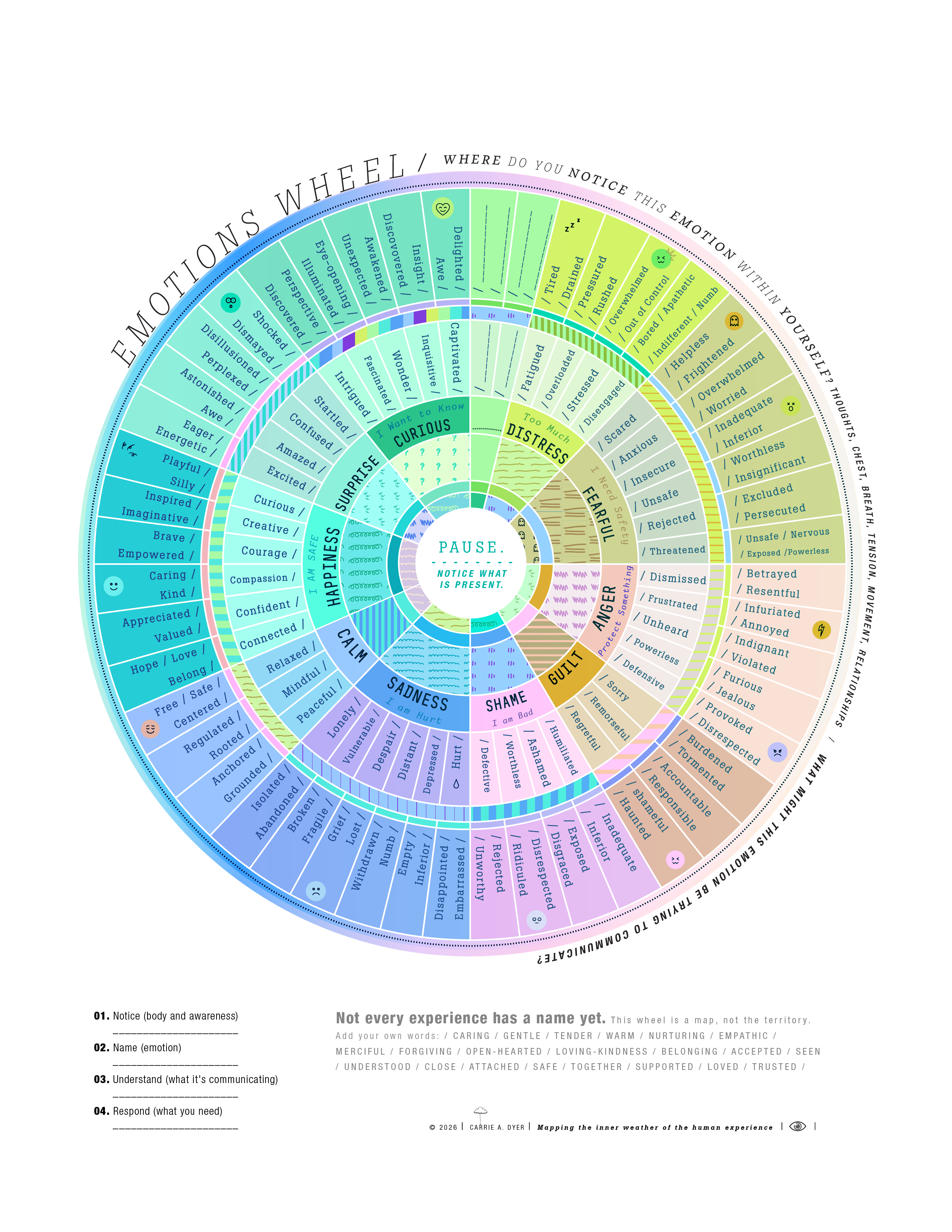
Sometimes it can be difficult to find words for what you are feeling, notice a pattern while you are in it, or remember what helps when life feels overwhelming. A visual, a question, or a small practice can offer another way in. This collection brings together worksheets, maps, and resources for exploring emotions, ADHD, anxiety, grief, and the different parts of your experience. Some offer ideas to try; others help make complex experiences a little easier to see and understand. You are welcome to explore what feels useful, return to a resource when you need it, or bring something to a session if you would like to explore it together. There is no need to finish everything or use a tool in a particular way.
A little more space to notice, understand, and find your way.
/ Therapeutic Tools and Visual Exercises /
Explore the resources below by choosing an image or title. You will find worksheets, visual frameworks, and educational materials to read, revisit, or talk about in therapy. Start with whatever feels meaningful to you.
Choose a topic, image, or question that feels relevant today. You can read, write, draw, or simply look—whatever helps you connect with the material.
Pause when you need to. It is okay to put a resource aside, skip a question, or come back to it later. You get to decide what feels supportive.
If you are working with a therapist, you can share what you notice or explore a resource together. You do not need to have the right words before you begin.
These resources are for education and reflection. They are not a substitute for individualized care or emergency support. If something feels difficult or brings up more than you want to hold alone, consider reaching out for support.
Begin with what feels interesting or relevant. You might be looking for language for an emotion, a way to understand worry, or something to help you feel more grounded.
Notice what resonates and what does not. You can write, sketch, talk, or simply sit with a question. Your experience does not have to fit neatly into a worksheet.
Some resources may feel helpful now; others may make more sense later. You are welcome to revisit them, adapt them, or share what you notice with someone you trust.
Maps of the Self-Scape offers a way to explore the many influences that shape how you move through daily life—including attention, identity, relationships, and the environments around you.
You might use it to notice patterns, make connections, or begin a conversation about experiences that have been difficult to explain.
Sometimes a map does not solve the terrain, but it helps us stop feeling lost inside it.
Worry can show up in different ways: overthinking, urgency, perfectionism, or the feeling that you need to prepare for everything. This framework offers a way to get curious about those patterns and what they may be trying to protect.
It can be a starting point for noticing what you need and exploring supportive responses at your own pace.
Emotive Organs uses images and symbols to explore emotional experiences that can be hard to put into words. Each form offers a way to reflect on feelings, needs, and protective responses with curiosity.
You do not need to be an artist or interpret the images in a particular way. Notice what speaks to you, and leave the rest.
You are welcome to return to these resources whenever you need a place to pause, reflect, or reconnect with yourself.
+